Xi'an Travel Guide: Terracotta Army, Wall, Muslim Quarter
Updated
Xi'an is four and a half hours from Beijing by fast train. Give it two days: one at the Terracotta Army, 40 km east, and one on the city wall and in the Muslim Quarter.
There is a short audio story about Xi'an in Mandarin, with English alongside. No Chinese needed for the beginner version. Jump to the storyA short history of Xi'an
The first emperor of Qin, who unified China in 221 BC, built his tomb east of the city and a clay army to guard it. Later the Han and then the Tang, the dynasty that ruled China from 618 to 907, governed from here, when the city was called Chang'an. In the 700s it held about a million people, with Persians, Japanese and Sogdian traders from Central Asia in its markets. The Silk Road began here.
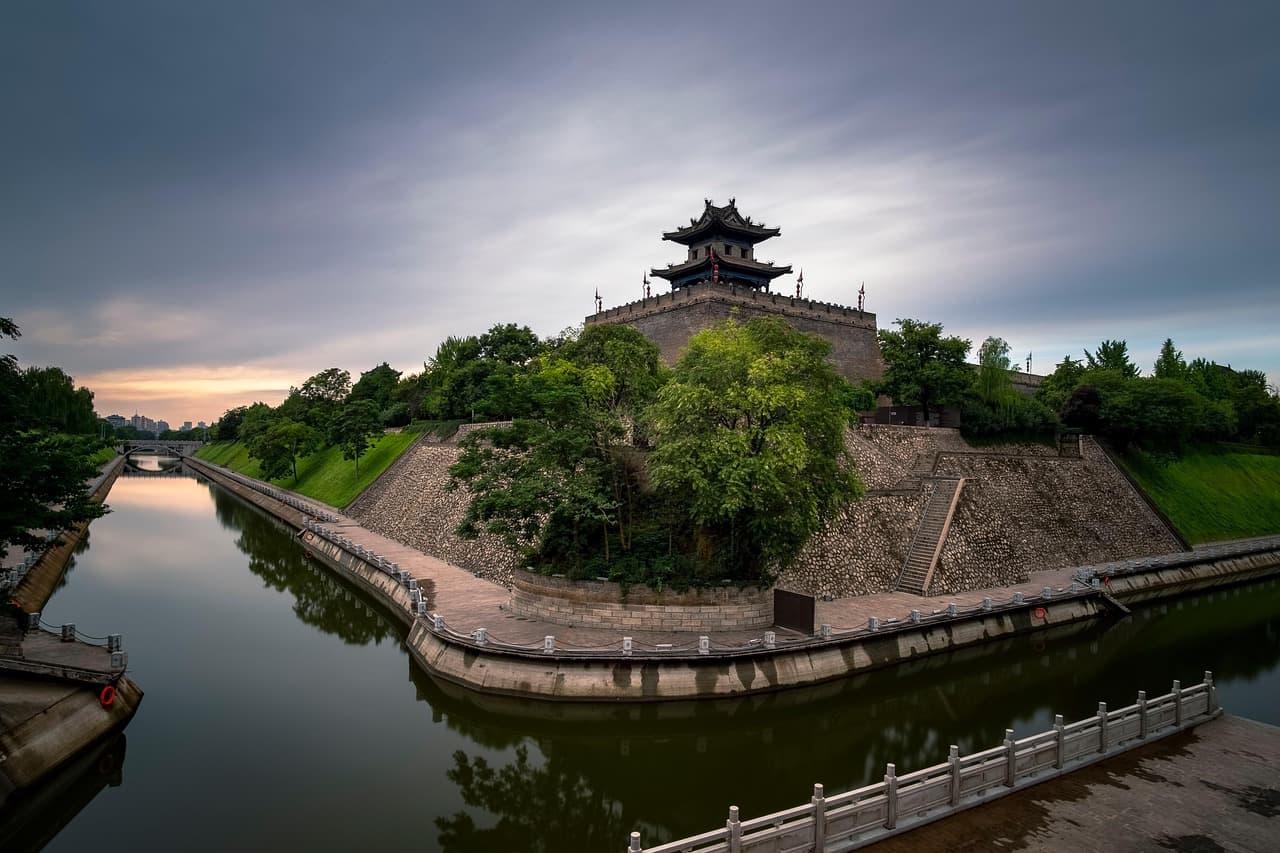
The wall you see is not Tang. It was built in the 1370s, early Ming, on the foundations of the Tang imperial city, and encloses a fraction of what Chang'an covered. Read the city in layers rather than as one ancient thing and it makes more sense.
The Terracotta Army
兵马俑 Bīngmǎyǒng
In March 1974 farmers digging a well near Lintong, 40 km east of Xi'an, struck pottery. They had found the first of three pits holding more than 8,000 life-size clay soldiers, buried with the first emperor around 210 BC. No two faces are the same. Pit 1, the largest, is a hangar with thousands of them standing in ranks the way they were found.
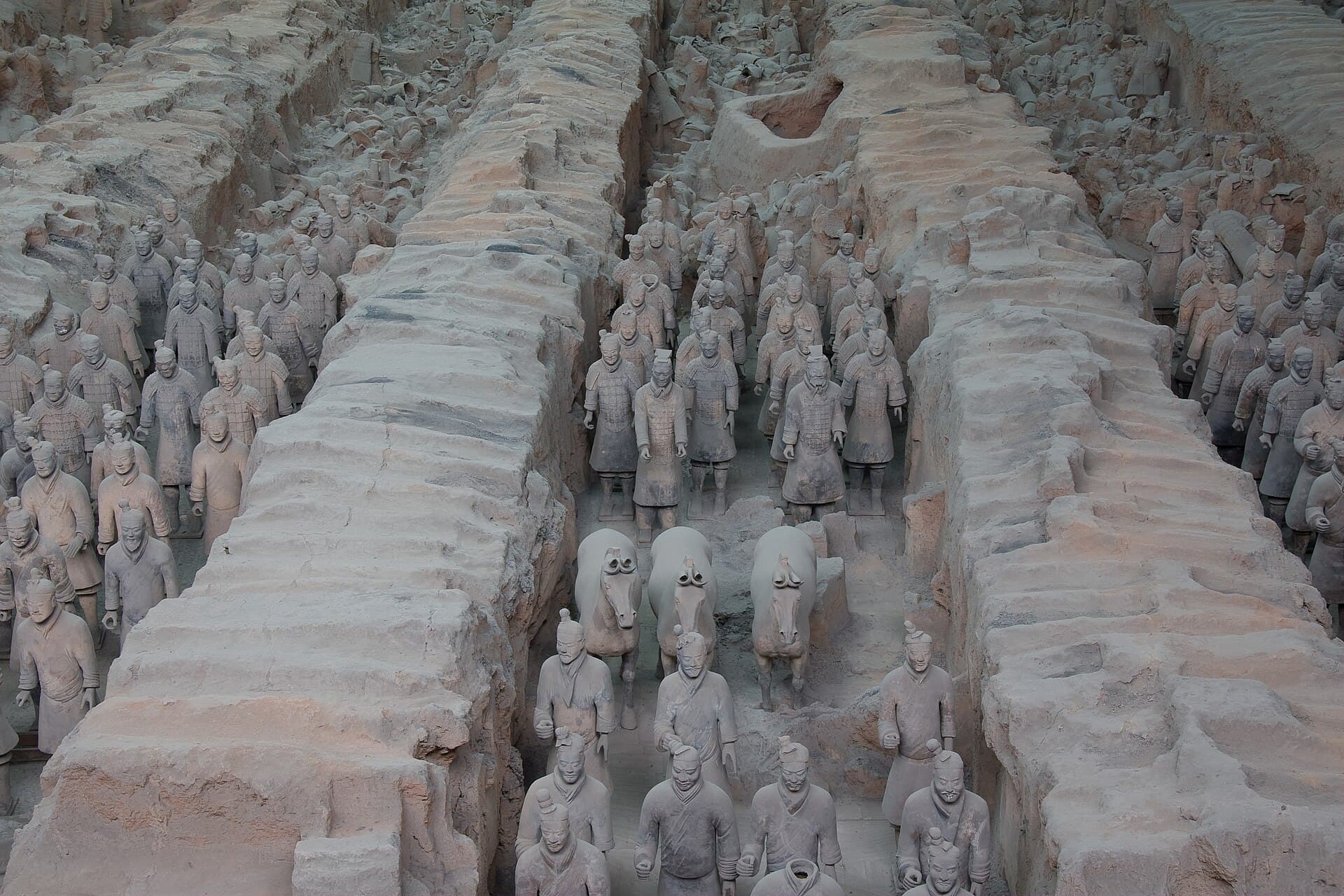
They were painted when they were buried. The lacquer under the paint dries and curls within minutes of meeting air, which is why the figures on show are grey, and why the emperor's own tomb mound, a short walk away, has never been opened.
How to visit the Terracotta Army
- 1
Book a named ticket
Book on the museum's official website or WeChat account, which open seven days ahead, or on Trip.com, which sells further out; a hotel can do it for you. You need your passport number, and the passport is your ticket at the gate. An adult ticket is about 120 yuan.
- 2
Get there early
The site is about 40 km east. Take metro Line 9 to Huaqing Pool, then a short bus or taxi ride. Tour groups arrive mid-morning, so an early start buys an hour of quiet.
- 3
Save Pit 1 for last
Start with the exhibition hall and the two bronze chariots, then Pits 3 and 2, where you can see figures up close. Walk into Pit 1 last. It lands harder when you know what you are looking at.
- 4
Take a guide, or the audio
The pits have very few labels. A licensed guide at the gate or the museum's audio guide turns rows of clay into a story. Ignore anyone offering a “terracotta factory” on the way.
Photos are allowed. Allow three hours at the site and most of a day with the travel.
Things to do in Xi'an beyond the Terracotta Army
The wall and the Muslim Quarter are in the centre. The Giant Wild Goose Pagoda is about 4 km south of the wall's South Gate.
The city wall 城墙
chéngqiáng
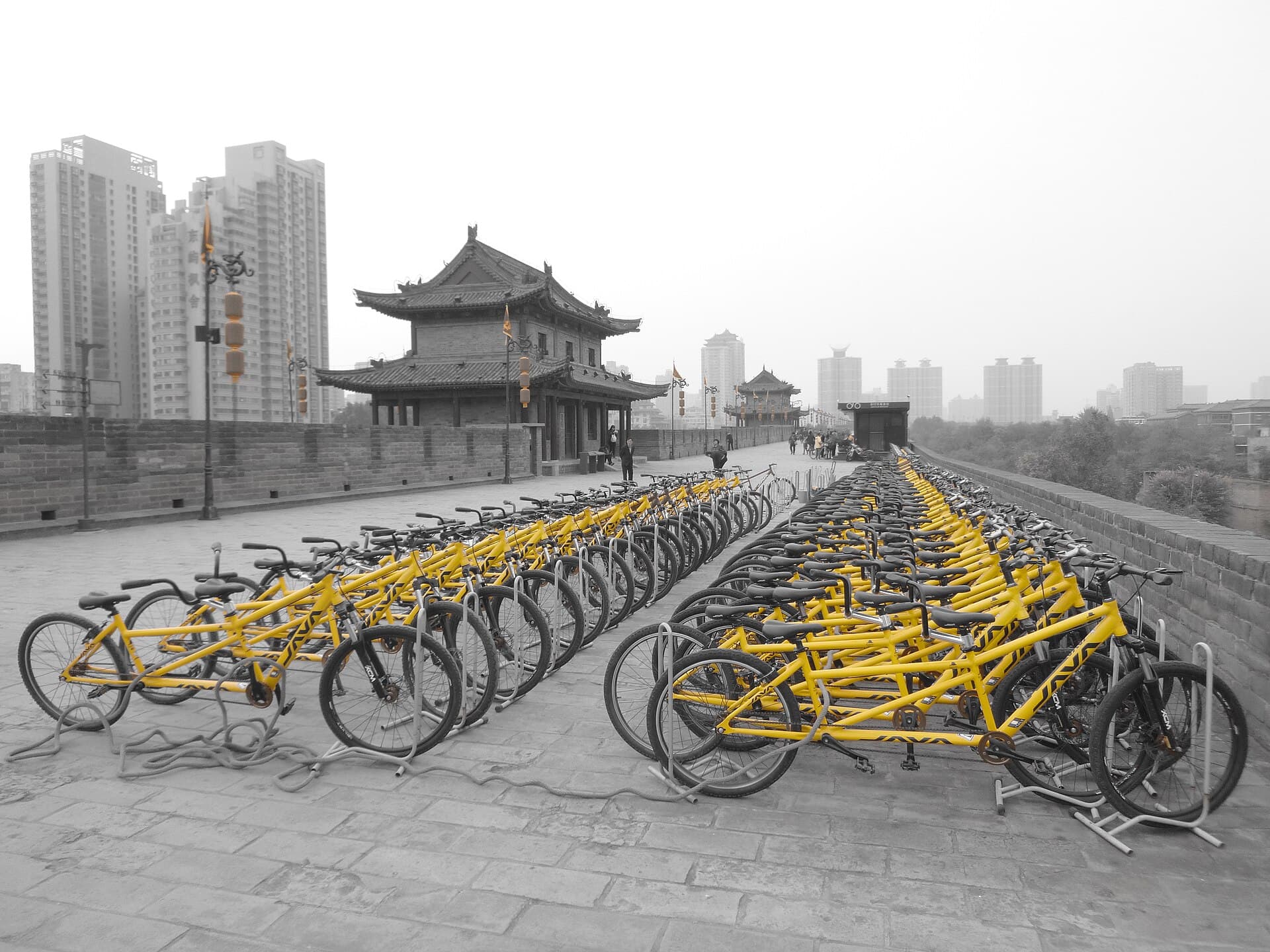
Built from 1370 to 1378, 13.7 km around, and wide enough on top for two bikes side by side. Rent one at the South Gate; bikes are usually hired for three hours, and the full circuit on these heavy bikes takes about two. Go in the late afternoon and finish as the lights come on.
The Muslim Quarter and the Great Mosque 回民街 · 大清真寺
Huímín Jiē · Dà Qīngzhēnsì
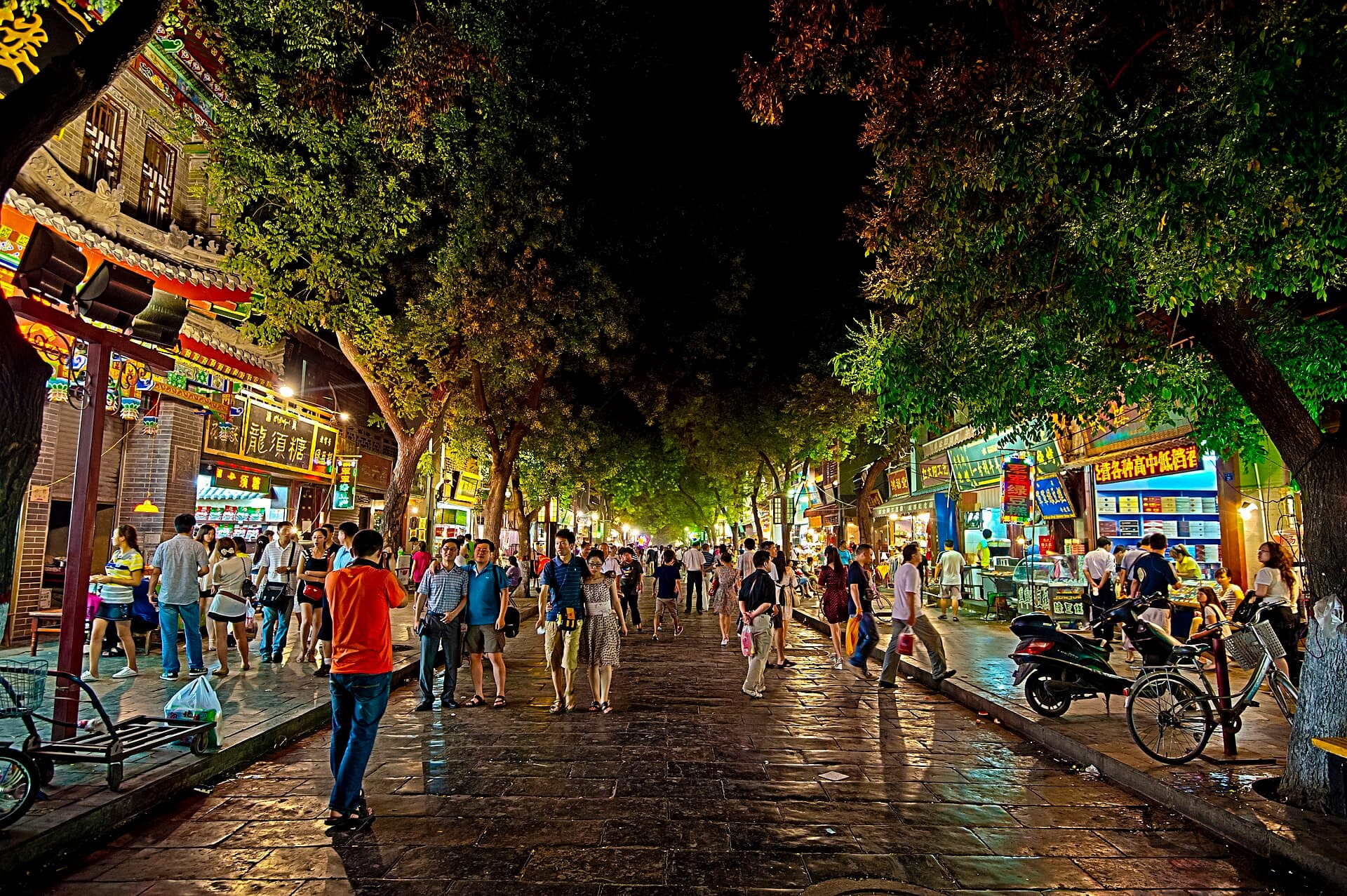
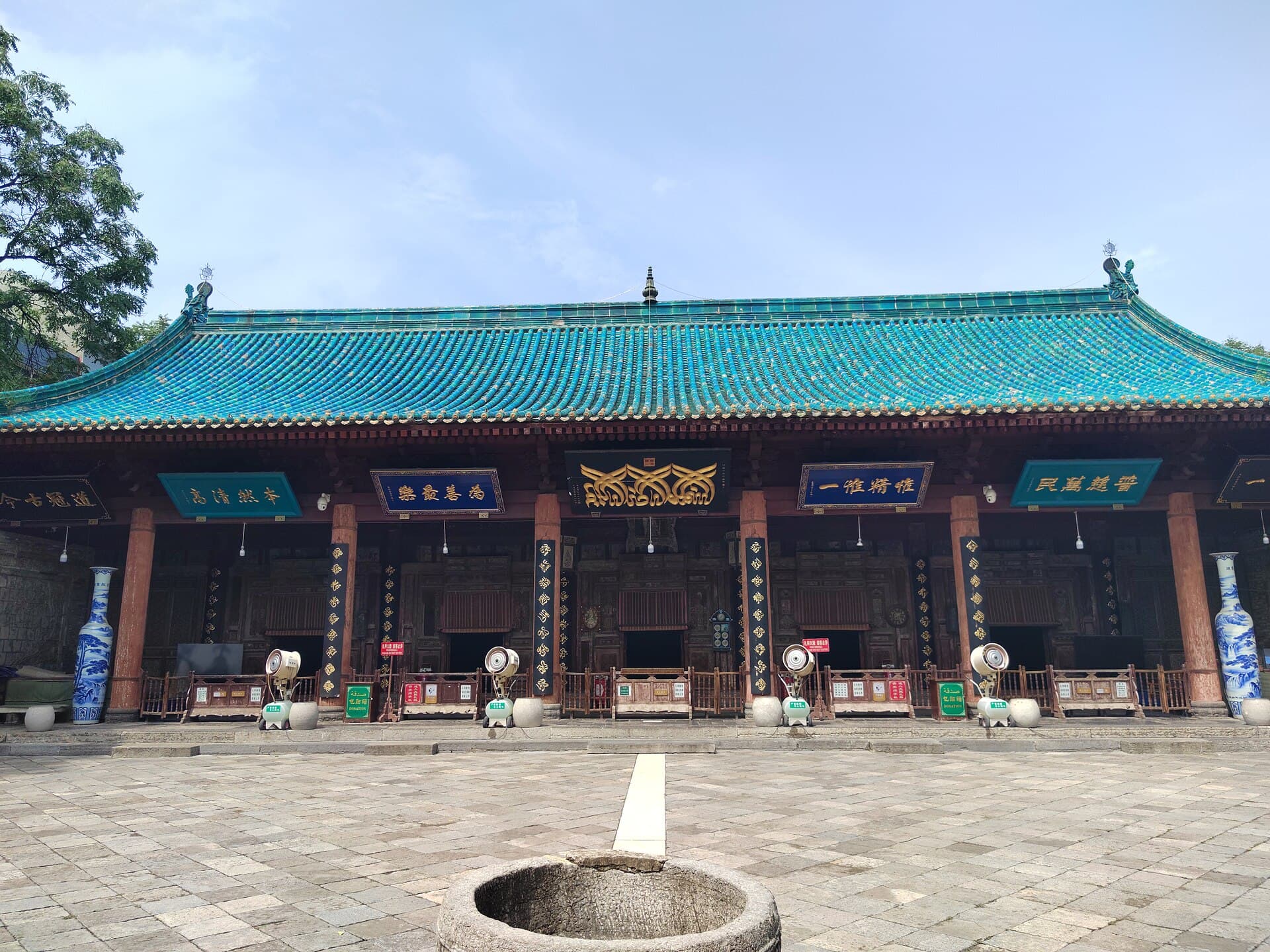
Behind the Drum Tower are the streets of Xi'an's Hui, Chinese Muslims whose ancestors came along the Silk Road. Beiyuanmen is the food street, packed every night. The Great Mosque, down a lane of souvenir stalls, is said to date from the Tang and looks like a Chinese temple with Arabic inside.
The Giant Wild Goose Pagoda 大雁塔
Dàyàn Tǎ
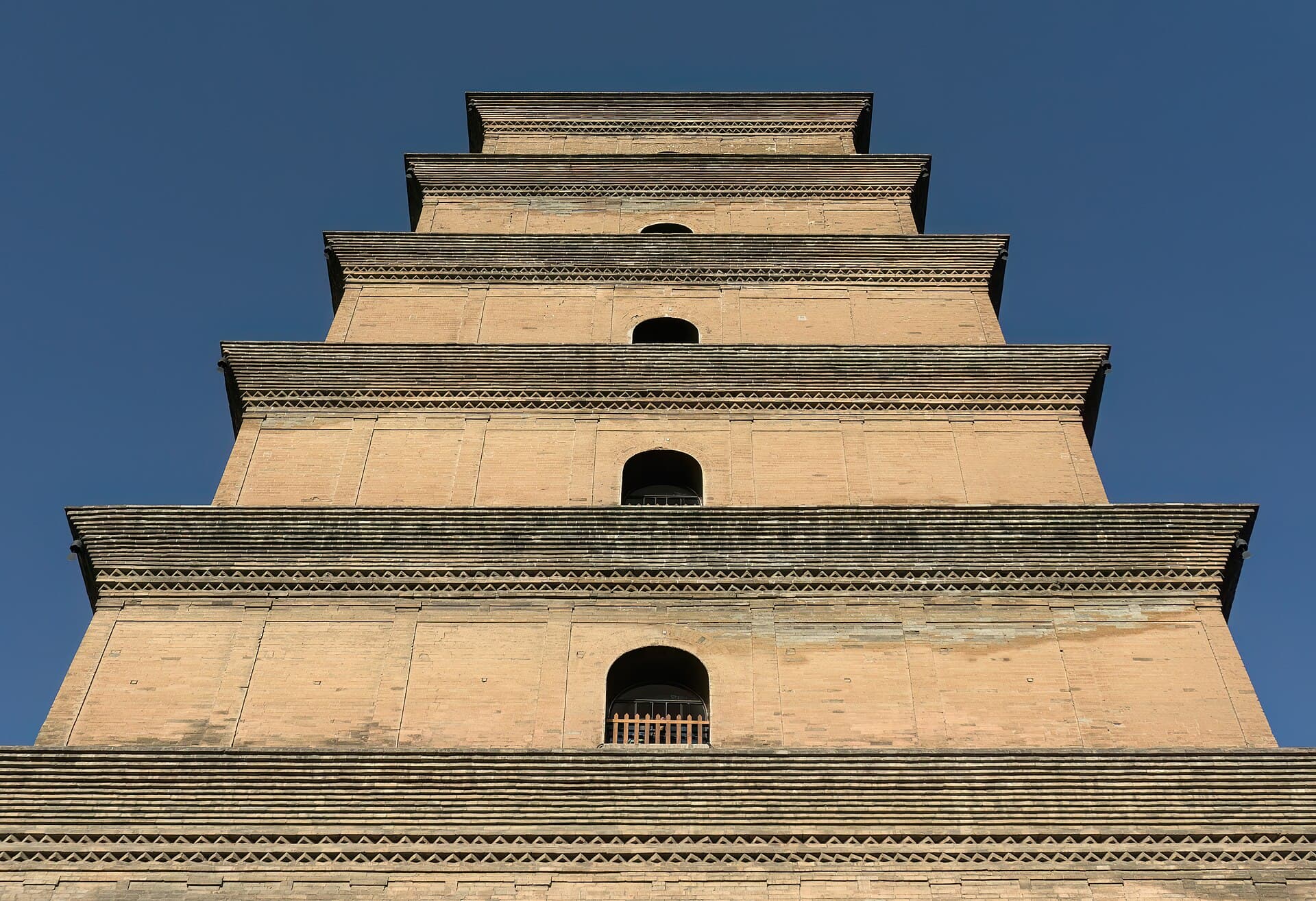
A brick pagoda from 652, built to hold the sutras the monk Xuanzang carried back from India, the journey behind Journey to the West. It stands in a temple with a big square in front that fills for the evening fountain show. The Shaanxi History Museum, a short walk away, is the best museum in the city. Its main galleries are free, but book a few days ahead on its WeChat account; the gate sells nothing.
What to eat in Xi'an
Roujiamo 肉夹馍
ròujiāmó
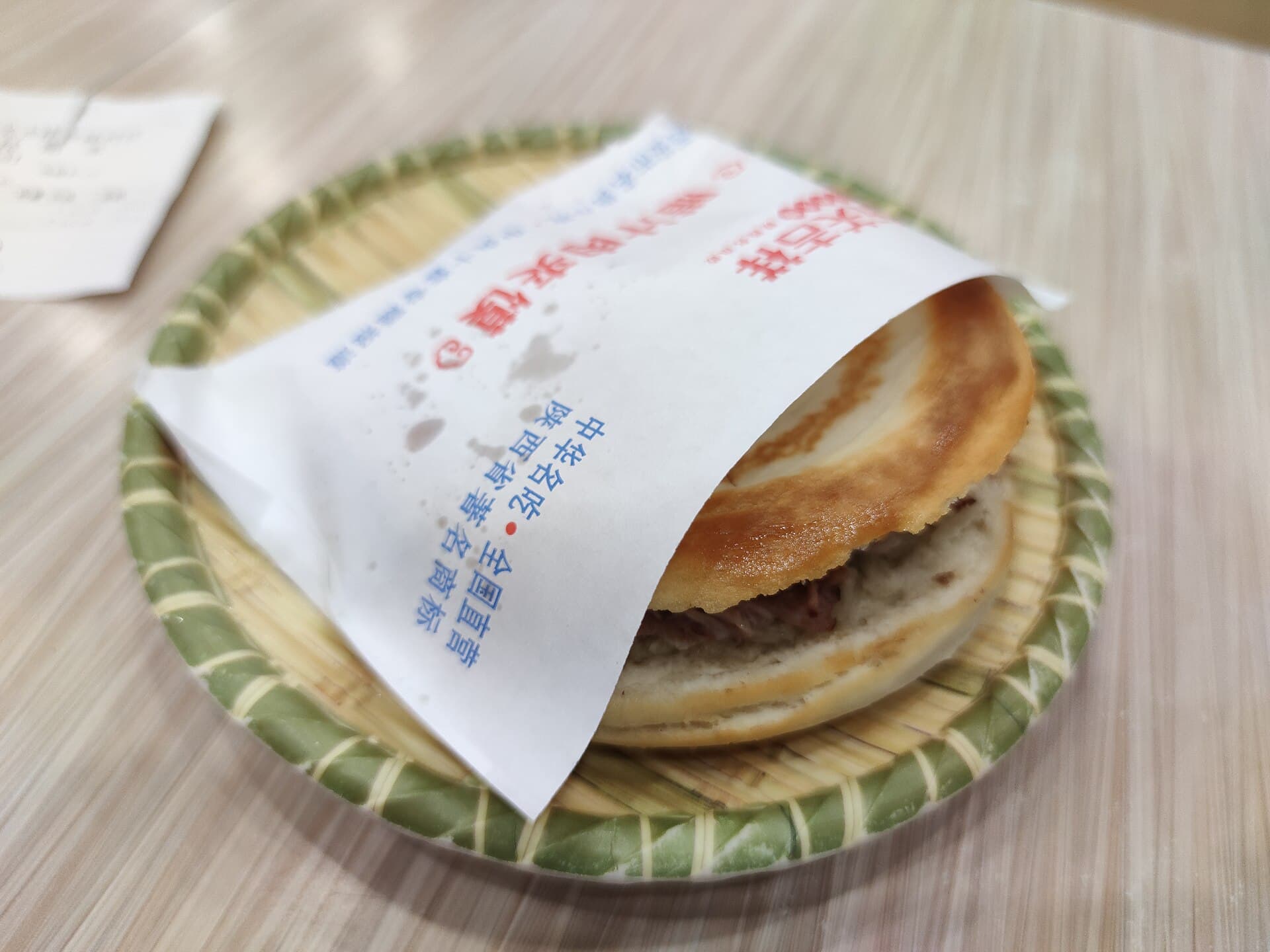
Chopped braised pork stuffed into a crisp flatbread. People call it the Chinese hamburger; it is older than the hamburger by a long way. In the Muslim Quarter the filling is beef or lamb.
Yangrou paomo 羊肉泡馍
yángròu pàomó
Lamb soup poured over bread you tear into pieces yourself. The tearing is the ritual; small pieces are correct.
Biangbiang noodles biángbiáng面
biángbiáng miàn
Wide belt noodles slapped on the counter, then doused with hot oil, chilli and garlic. The character for biang has more than fifty strokes and is not in most dictionaries.
Plan your trip to Xi'an
Best time to visit Xi'an
Spring and autumn are dry and mild, the best weather for the wall. Summer is hot, often in the mid-30s. Winter is cold and often grey with smog, but the sites are quiet.
In the first week of October the museum lets in up to 80,000 people a day.
Getting to Xi'an
Xianyang airport is about 40 km northwest of the centre. Metro Line 14, with a change to Line 2 at Xi'an North, takes a bit over an hour; a taxi takes about 45 minutes.
Fast trains use Xi'an North, 20 to 30 minutes from the Bell Tower on Line 2. The fastest take about four and a quarter hours from Beijing West and three from Chengdu East. Slower trains use the old Xi'an station by the north wall.
Getting around Xi'an
Line 2 runs north to south through the Bell Tower; inside the wall, walk. For anything else, Didi has an English interface and takes foreign cards.
Pay with Alipay or WeChat Pay, both linked to a foreign card, and keep some cash for the smaller stalls in the Muslim Quarter. Metro signs have English; stall menus don't, so point.
Where to stay in Xi'an
Stay inside the wall, near the Bell Tower or the South Gate. You can walk to the Muslim Quarter and up onto the wall, and Line 2 takes you to the fast trains.
Around the Giant Wild Goose Pagoda, south of the wall, hotels are newer but you'll take the metro in every evening. Stay by Xi'an North only for an early train.
Xi'an in three days
- Day 1. The Terracotta Army: leave early on Line 9, spend the morning at the pits, and eat in the Muslim Quarter at night.
- Day 2. The Giant Wild Goose Pagoda and the Shaanxi History Museum in the morning, then ride the city wall from the South Gate in the late afternoon.
- Day 3. Huashan, the steep granite mountain half an hour east by fast train. Start early; it takes the whole day.
Questions about visiting Xi'an
How do you get to the Terracotta Army from Xi'an?
Take metro Line 9 to Huaqing Pool, then a local bus or taxi for the last stretch; allow about an hour and a half from the centre. A hotel driver is easier for a group.
Do you need to book the Terracotta Army in advance?
Yes. Tickets are named and limited, and in summer and on holidays they sell out days ahead. Bring the passport you booked with.
Can you still see colour on the terracotta warriors?
Barely. They were painted, but the lacquer under the paint peels within minutes of meeting air, so almost every figure on show is grey. A few behind glass keep traces. It is why large parts of the site are left unexcavated.
Do you need a tour to see the Terracotta Army?
Not to get there: the metro and a bus work fine. What a tour adds is a guide at the pits, and you can hire a licensed one at the gate instead.
Is Huashan worth a day from Xi'an?
If you like steep climbs, yes. Fast trains reach Huashan North in about half an hour, then a shuttle bus and cable cars take you up. Leave early and check when the last cable car goes down.
Chinese you'll see in Xi'an
At the station, on tickets and on menus.
The line under each word is pinyin, the Chinese sounds written in our alphabet. The marks over the vowels are tones; people will understand you without them at first.
- 西安北站Xī'ān Běizhàn
- Xi'an North station
- 钟楼Zhōnglóu
- the Bell Tower, the centre
- 城墙chéngqiáng
- city wall
- 兵马俑Bīngmǎyǒng
- the Terracotta Army
- 门票ménpiào
- admission ticket
- 回民街Huímín Jiē
- the Muslim Quarter
- 清真qīngzhēn
- halal
- 羊肉yángròu
- lamb
- 大雁塔Dàyàn Tǎ
- the Giant Wild Goose Pagoda
- 出租车chūzūchē
- taxi
Want more? Browse Chinese vocabulary by level.
Hear Xi'an in Mandarin
Our audio story rides the wall, stands over Pit 1 and asks what “ancient capital” really means here.
The story is Xi'an City Wall and Its 2,000-Year History. It is told four ways, one for each level. Every version has a transcript with pinyin and English, so start with Beginner if you have no Chinese yet.