Hangzhou Travel Guide: West Lake, Lingyin Temple, Longjing
Updated
Hangzhou is 45 minutes from Shanghai by fast train, and its lake is free and open all night. Plan day one around a single walk: the 2.8 km Su Causeway, then sunset on the west shore.
There is a short audio story about Hangzhou in Mandarin, with English alongside. No Chinese needed for the beginner version. Jump to the storyA short history of Hangzhou
Hangzhou was the capital of the Southern Song dynasty from 1138 to 1276, when the Song court ruled only southern China. It was probably the largest and richest city in the world. The causeways, the islands and the names of the views were all set out then.
West Lake is shallow and silts up. It only exists because the city has dredged it for a thousand years; the Su Causeway is the mud dug out in 1089. UNESCO listed the lake in 2011 as a cultural landscape, not a natural one, and that is the way to see it: a garden the size of a lake.
West Lake
西湖 Xī Hú
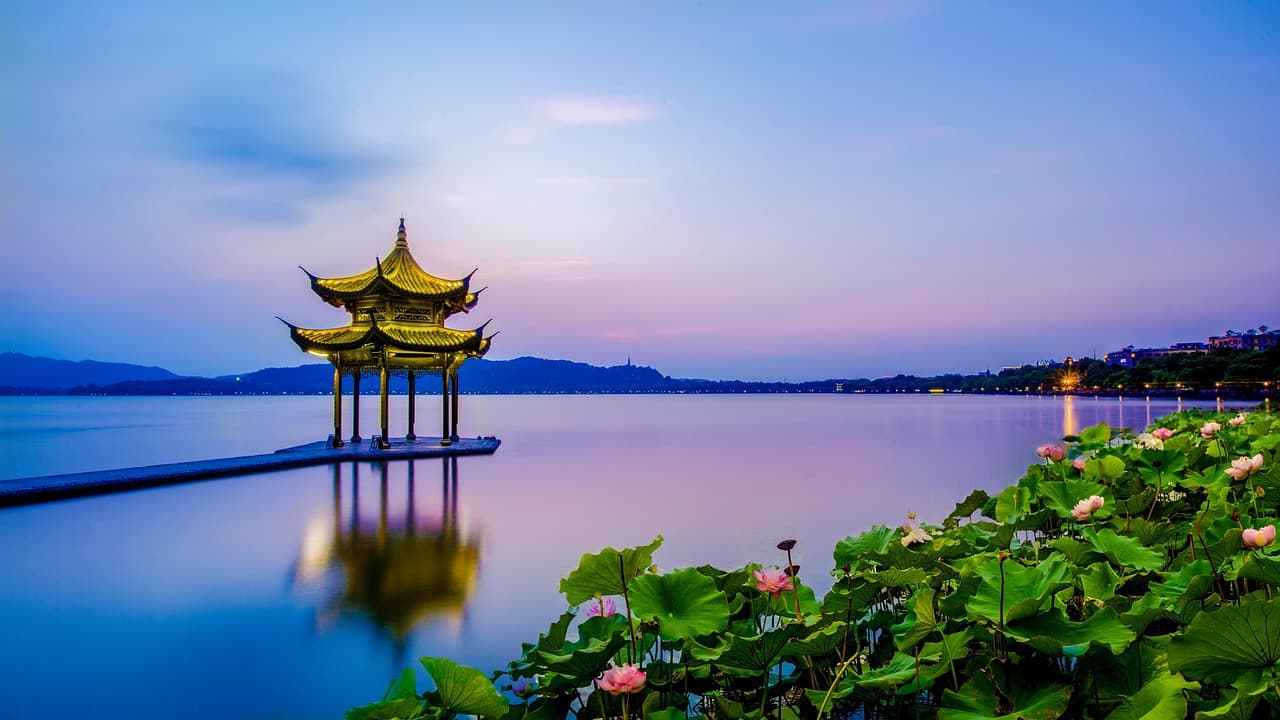
The lake is a little over six square kilometres, with hills on three sides and the city on the fourth. Two causeways cross it. The Bai Causeway in the north is short and busy. The Su Causeway runs 2.8 km from north to south over six bridges, built in 1089 under Su Shi, the poet-governor. Walking it end to end takes about an hour and is the best thing to do in Hangzhou.
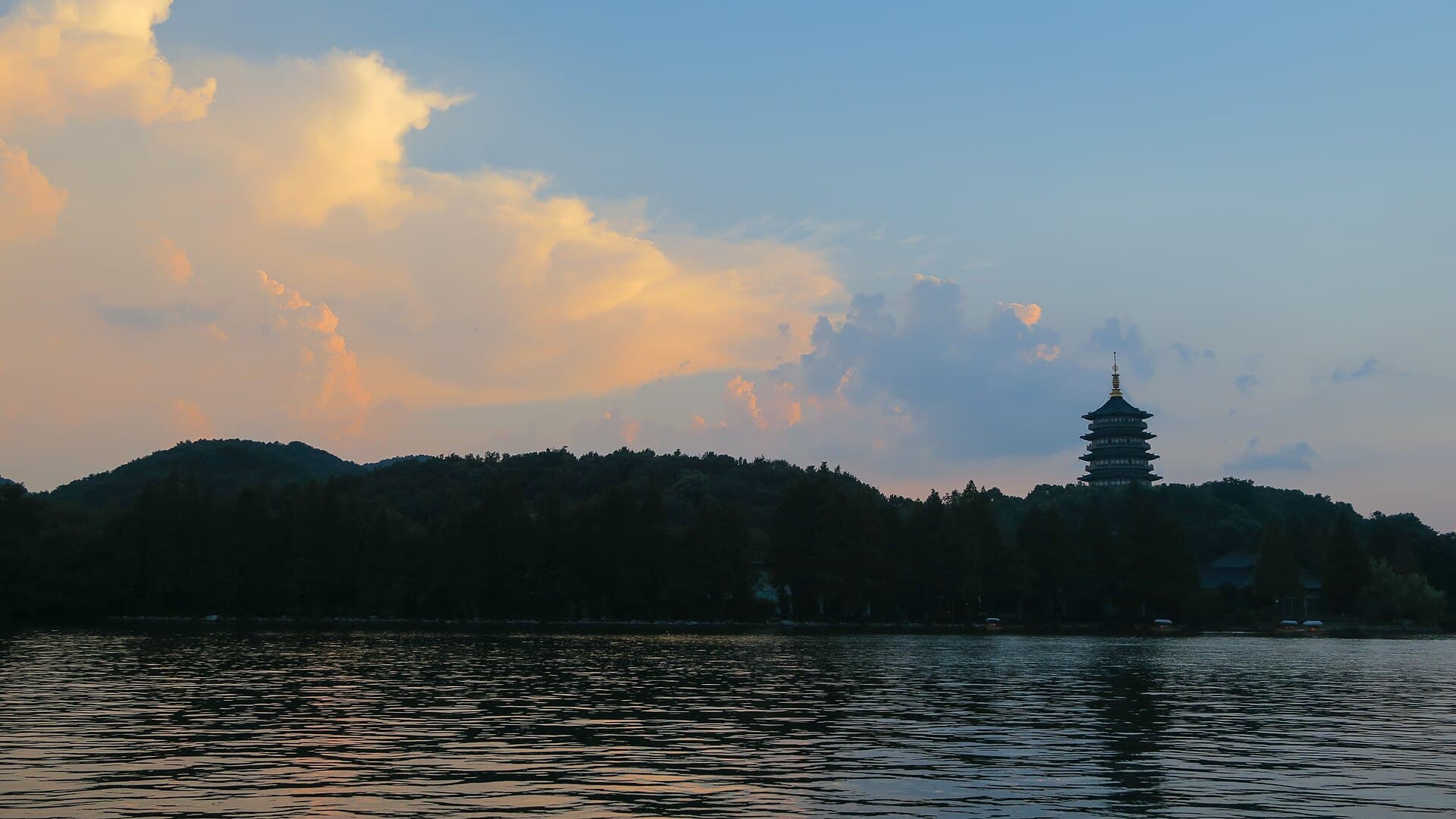
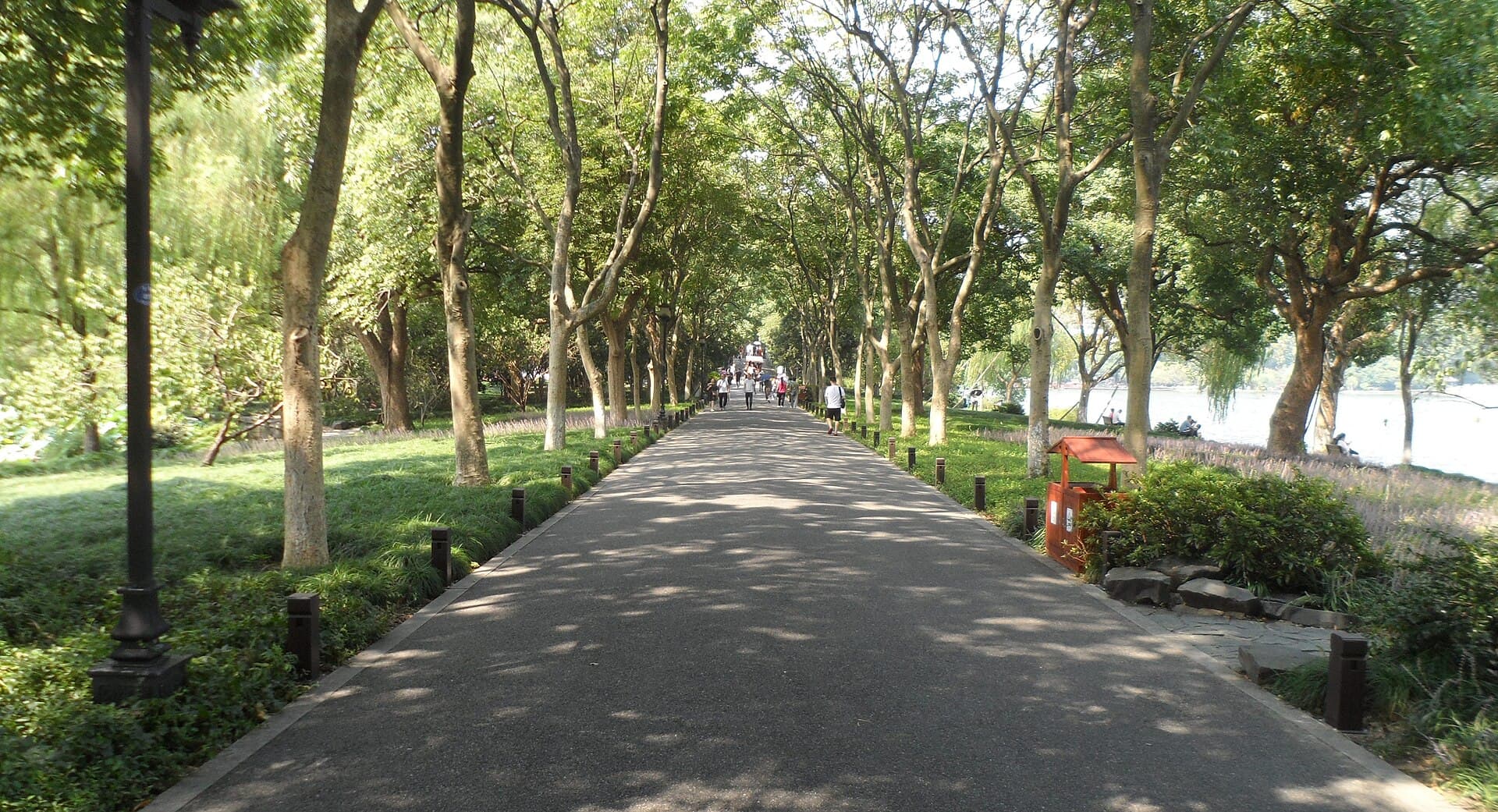
The Ten Scenes of West Lake were named in the Song dynasty, and each ties a spot to a time or a season: Spring Dawn at the Su Causeway, Lingering Snow on the Broken Bridge, Leifeng Pagoda in Evening Glow. You will not get all ten. You can get one: be on the west shore at sunset with the pagoda in front of you.
How to visit West Lake
- 1
Nothing to book; start early
The lake needs no ticket and no booking. Begin at the Broken Bridge in the northeast corner before the tour groups arrive, and walk the Bai Causeway to Solitary Hill. The view back to the city is the classic one.
- 2
Walk the Su Causeway
From the north end, go south over the six bridges. Bikes have been banned from both causeways since 2018, so this part is on foot. In summer, stop at Quyuan Garden on the west side for the lotuses.
- 3
Take a boat to the island
From the south end, boats run to Three Pools Mirroring the Moon, the island on the back of the one-yuan note. Twenty minutes each way, and it breaks up the walking.
- 4
End on the west shore for sunset
Leifeng Pagoda, rebuilt in 2002 on the site of the one that fell down in 1924, is the sunset view. You can go up it, but the picture is from the shore.
The shore and both causeways are free and never close. The island boats and Leifeng Pagoda charge. On weekends and public holidays the lakeside fills completely; a weekday is a different place.
Things to do in Hangzhou beyond the lake
The tea hills start where the lake ends. Lingyin Temple is in the hills to the west, the canal to the north.
The Longjing tea villages 龙井村
Lóngjǐng Cūn
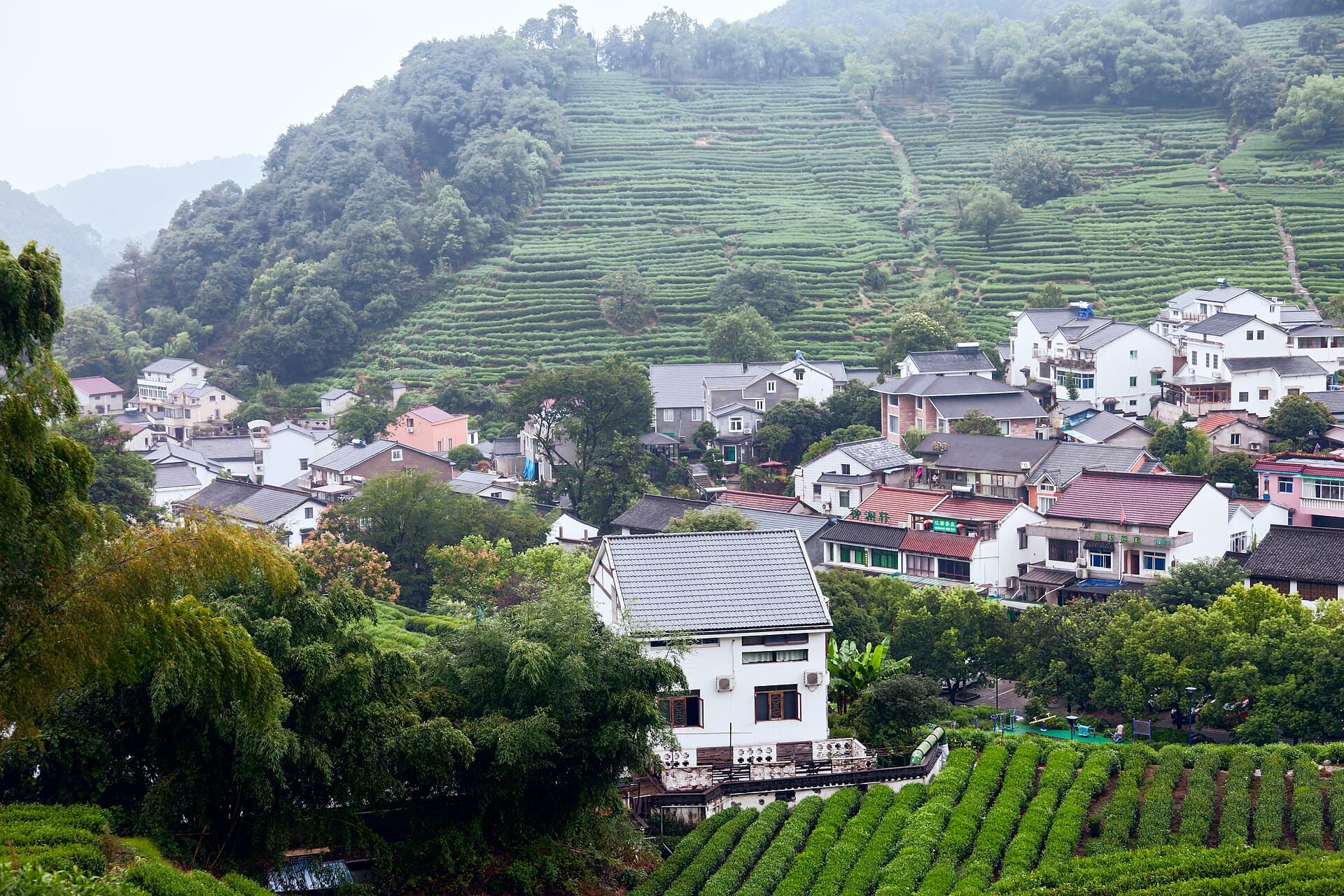
Longjing, “Dragon Well”, is both a village and China’s most famous green tea, grown on the hills just west of the lake. Longjing village and Meijiawu are 15 to 30 minutes by taxi from the west shore. Walk between the terraces and drink a glass in a farmhouse with the leaves floating in it. The first picking, before the Qingming festival in early April, is the one people pay silly money for.
Lingyin Temple and Feilai Feng 灵隐寺 · 飞来峰
Língyǐn Sì · Fēilái Fēng
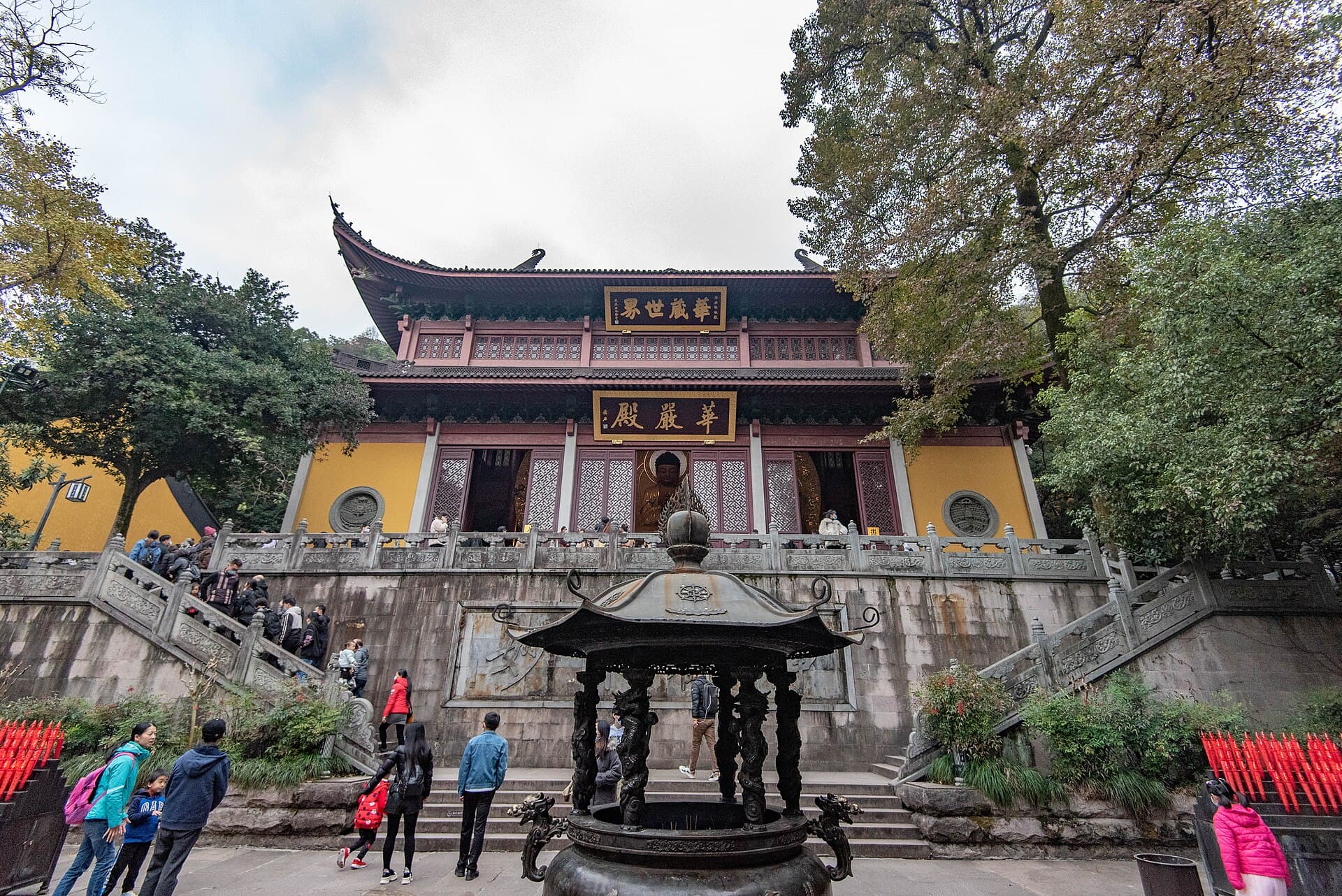
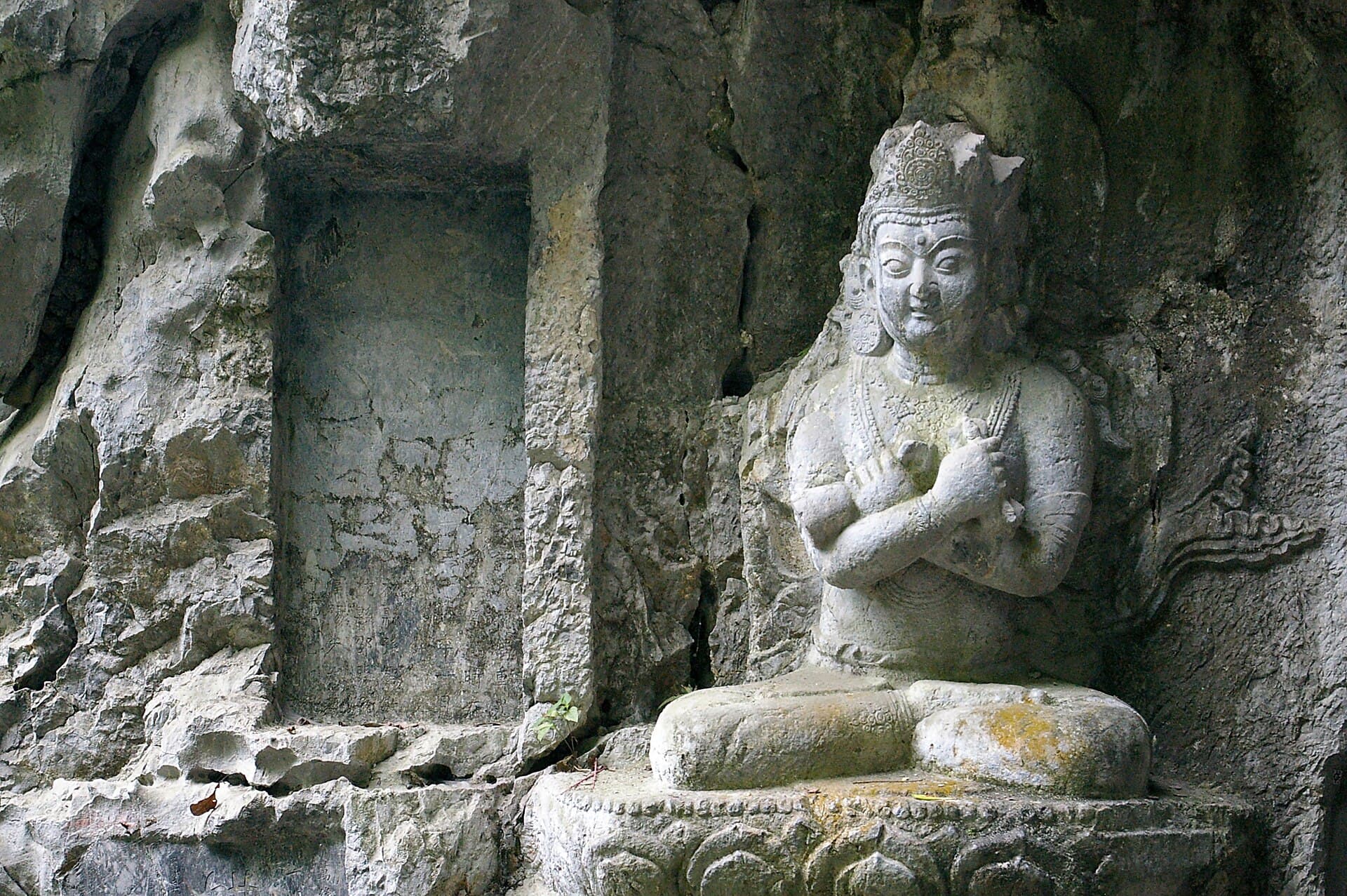
One of the great Buddhist temples of southern China, founded in the 4th century and rebuilt many times since, in a wooded valley west of the lake. On the way in you pass Feilai Feng, a limestone hill with hundreds of Buddhas carved into it between the 10th and 14th centuries. Entry has been free since December 2025, but only with a booked time slot. On weekends and holidays taxis can’t drive in by day, and a shuttle bus does the last stretch. Give the two half a day.
The Grand Canal at Gongchen Bridge 拱宸桥
Gǒngchén Qiáo
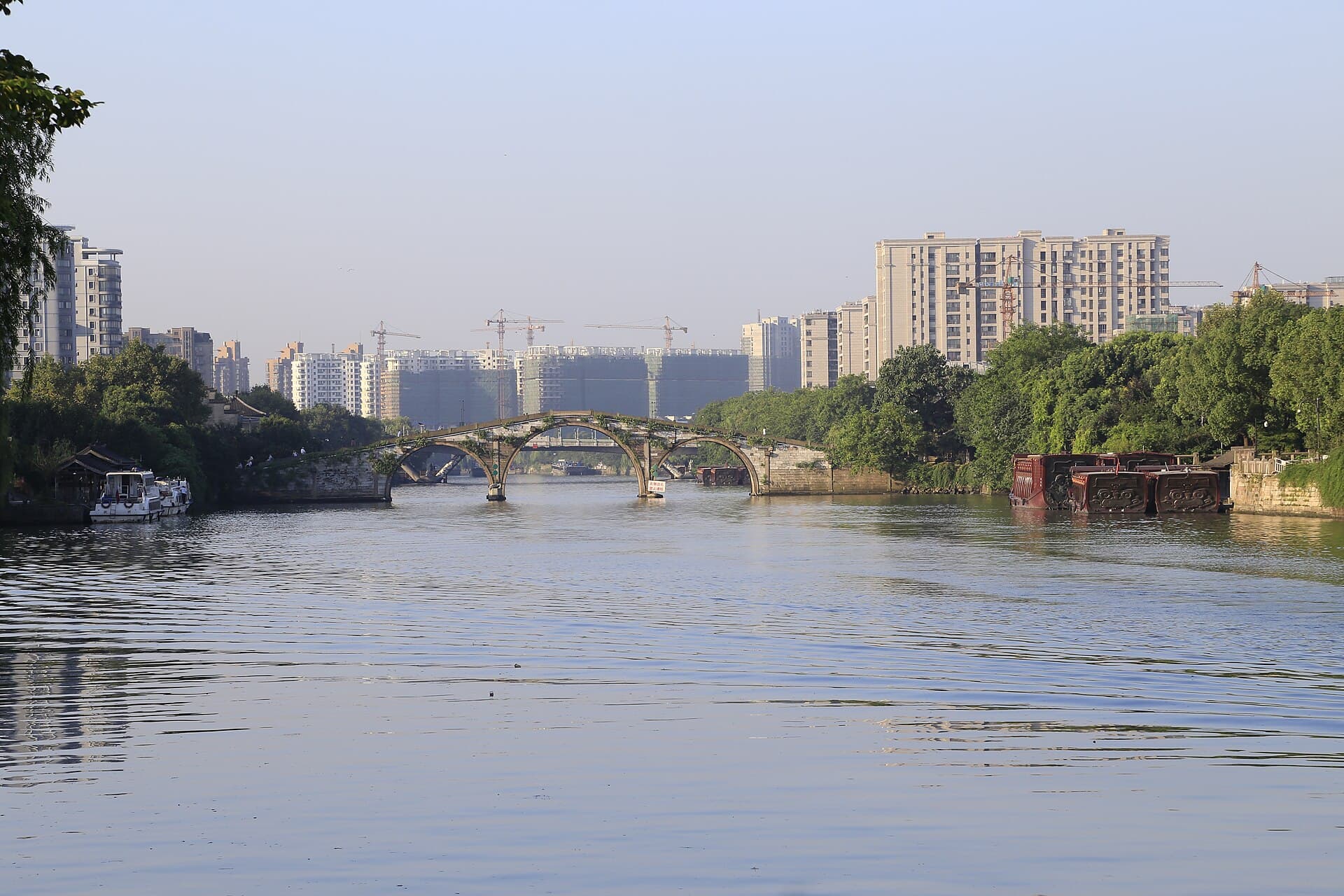
Hangzhou is the southern end of the Grand Canal, the 1,800 km waterway that fed the capitals in the north. Gongchen Bridge, built in 1631, marks the end of it. Take the canal water bus up from the city and come back at dusk, when the old warehouses along the bank are lit.
What to eat in Hangzhou
Dongpo pork 东坡肉
Dōngpō ròu
Pork belly braised for hours in soy, rice wine and sugar until it wobbles, named after the same Su Shi who built the causeway. One cube is a meal.
West Lake fish in vinegar 西湖醋鱼
Xīhú cùyú
A whole grass carp poached and covered in a sweet-and-sour sauce. Hangzhou’s signature dish, and the one visitors argue about most.
Longjing shrimp 龙井虾仁
Lóngjǐng xiārén
River shrimp stir-fried with fresh Longjing tea leaves. Light, pale and a little bitter.
Plan your trip to Hangzhou
Best time to visit Hangzhou
Late March to May brings green willows and the tea harvest. October is clear and mild, and from late September the osmanthus trees flower; Manjuelong, a village in the hills above the lake, is where people go to smell them.
June brings the plum rains, weeks of grey drizzle. July and August are hot and humid, but the lotuses are out.
Getting to Hangzhou
Most fast trains stop at Hangzhou East: 45 minutes from Shanghai Hongqiao on the fastest, about four and a half hours from Beijing South. Metro Line 1 runs from under the station to Longxiangqiao, by the lake, in about 20 minutes.
Xiaoshan airport is about 30 km east of the lake. Metro Line 19 with one change, or a taxi, takes about an hour.
Getting around Hangzhou
Around the lake, walk. For the hills, take a taxi or Didi, which has an English interface and takes foreign cards. Shared bikes unlock from Alipay once your passport is verified in the app.
Alipay was started here, and everyone pays with it or WeChat Pay; both take foreign cards. Metro signs are in English. Menus in small restaurants usually aren’t.
Where to stay in Hangzhou
On a first visit, stay on the east shore around Hubin and Longxiangqiao: the lake is a walk away, the metro is underneath, and restaurants stay open late. Hefang Street, a restored old shopping street just south, is the other easy base.
For quiet, try guesthouses in the tea villages west of the lake. You’ll need taxis, but the terraces are outside your door.
Hangzhou in two days
- Day 1. The lake: the Broken Bridge and the Bai Causeway early, the Su Causeway on foot, a boat to Three Pools Mirroring the Moon, and sunset facing Leifeng Pagoda.
- Day 2. Lingyin Temple and Feilai Feng in the morning, booked ahead, then a taxi to Longjing village for tea. Take the canal water bus to Gongchen Bridge for dusk.
Questions about visiting Hangzhou
Is West Lake free?
Yes. The whole shore, both causeways and the parks are free and never close. You pay for the island boats and Leifeng Pagoda.
Can you cycle around West Lake?
Yes, on the roads round the shore, about 15 km in all. Bikes are banned from the Su and Bai causeways, so cyclists go round by the Yanggong Causeway on the west side.
Do you need to book Lingyin Temple?
Yes. Entry is free, but you book a time slot with your passport on the “Hangzhou Lingyin Feilai Peak” mini-program in Alipay or WeChat. Slots open at 8 am seven days ahead, and you can’t book on the day.
Is Hangzhou worth a day trip from Shanghai?
For the lake, yes. Take an early train to Hangzhou East and Line 1 to Longxiangqiao, and you can walk both causeways and be back for dinner. Lingyin and the tea hills need a second day.
When is the new Longjing tea picked?
From mid to late March. Tea picked before the Qingming festival in early April is the prized, expensive kind. Ask to taste before you buy in the villages.
Chinese you’ll see in Hangzhou
At the station, around the lake and at the temple gate.
The line under each word is pinyin, the Chinese sounds written in our alphabet. The marks over the vowels are tones; people will understand you without them at first.
- 杭州东站Hángzhōu Dōngzhàn
- Hangzhou East station
- 地铁dìtiě
- metro
- 出口chūkǒu
- exit
- 西湖Xī Hú
- West Lake
- 苏堤Sū Dī
- the Su Causeway
- 码头mǎtóu
- pier, where the boats leave
- 雷峰塔Léifēng Tǎ
- Leifeng Pagoda
- 灵隐寺Língyǐn Sì
- Lingyin Temple
- 预约yùyuē
- booking, reservation
- 龙井茶Lóngjǐng chá
- Dragon Well tea
Want more? Browse Chinese vocabulary by level.
Hear Hangzhou in Mandarin
Our audio story walks the Su Causeway and asks what it takes to stop a shallow lake turning back into marsh.
The story is Hangzhou: The Lake That Would Vanish If Nobody Dug It. It is told four ways, one for each level. Every version has a transcript with pinyin and English, so start with Beginner if you have no Chinese yet.